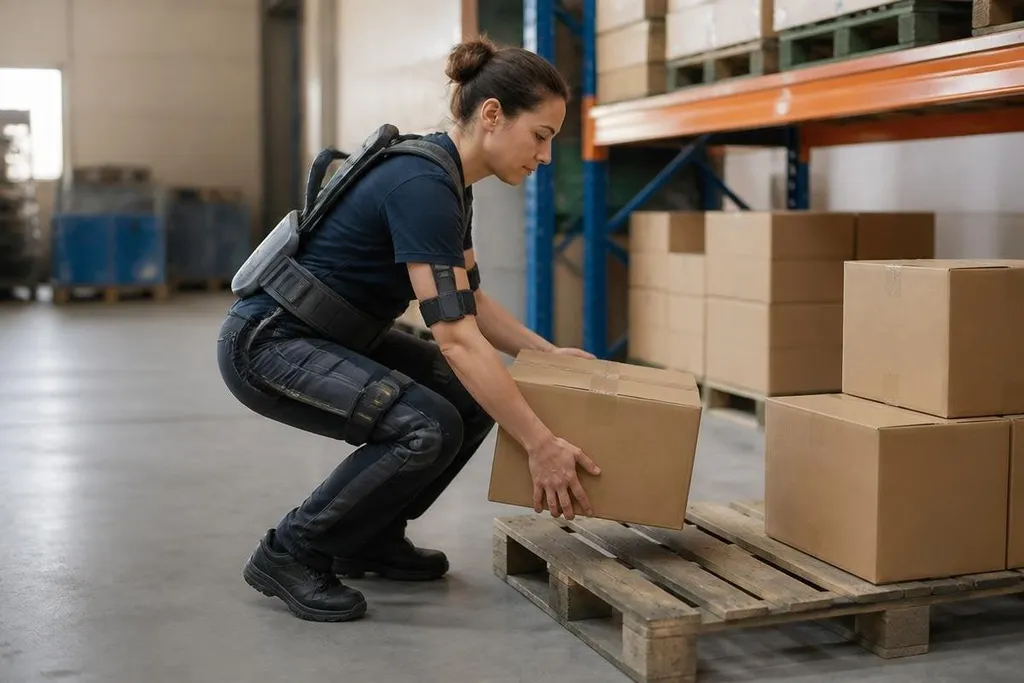
An exoskeleton can reduce the effort needed for a lift, support a joint, or help a person move. The hard part is proving that help lasts through a real workday without adding new problems.
The source pack for this article contains no verified product data, trials, prices, or dates. So the useful question is what evidence a claimed advance must show before you spend money or change a work process.
- Check the task first: lifting, walking, rehabilitation, or load carrying
- Ask for measured battery life under the stated workload
- Treat comfort, safety, and setup time as part of the robot
The task decides the design
An industrial back-support exoskeleton and a medical walking system solve different problems. One may reduce load on the lower back during repeated lifting. The other may help a person move a leg through a controlled gait, which is the pattern of walking steps.
That difference matters because a device that works well during a fixed motion may struggle when the user turns, reaches, climbs, or stops. A useful test must match the movement people actually make, not a short demonstration chosen for easy filming.
The next wave of progress will likely come from systems that sense the user’s intent sooner. Sensors can read joint motion, force, or muscle activity. The controller then decides when to add support and when to stay out of the way.
That timing is hard. Too little support gives the user no reason to wear the device. Too much support can make movement feel forced and may change how the person works.
Battery life is only one part of the problem
A battery figure has little value without a task, load, speed, and duty cycle. A device may run for a stated number of hours during light movement, then use power much faster during repeated lifts or powered walking.
The weight of the battery also matters. Extra mass can raise the effort needed to climb stairs or recover from a stumble. A design that reduces muscle work but adds a heavy pack may trade one burden for another.
Look for reports that state the battery size, recharge time, operating mode, and support level. Those details let you compare a device with the shift or treatment session you care about.
Pressure at the hips and heat around the motors can end an exoskeleton trial before its assistance matters. Claims about comfort and safety carry more weight when Robot24.com ties them to a named device, wear time, test setting, and date. Those details let you judge whether the frame fits a full shift or a short therapy session.
Comfort and safety decide adoption
An exoskeleton touches the body at several points. Pressure, heat, noise, and restricted movement can matter as much as motor torque, which is the turning force at a joint.
Fit also changes from person to person. A device that suits one body shape may rub against another user’s skin or limit their range of motion. The evidence should state who wore it, how long they wore it, and which movements caused trouble.
Safety tests need the same care. A powered joint must respond correctly when the user stops, loses balance, or removes the device. The system should also have a clear way to stop movement during setup and maintenance.
These details rarely fit into a short product video. They belong in trial records, safety documents, and reports from people who used the device for the full task.
What to check before a purchase
Use this list when a supplier presents a new exoskeleton or claims a major step forward:
- Name the task. Write down the exact lift, walk, reach, or treatment motion.
- Request test conditions. Ask for load, speed, session length, and user count.
- Measure setup time. Include fitting, calibration, charging, cleaning, and removal.
- Check failure handling. Find out what happens during a sensor fault or low battery.
- Ask about service. Confirm spare parts, software updates, training, and repair time.
A strong result should show a useful change for a defined group of people. It should also state the cost in weight, power, time, and training. Without those details, the word “advance” says more about the presentation than the machine.
The evidence still missing
The next claims worth watching are the ones that connect lab results with repeated use in a workplace, clinic, or care setting. Those reports need clear task data and enough time to show fatigue, comfort, faults, and maintenance needs.
I’d reserve that label for a system that shows that complete record, not one that moves well for a short clip. Until those records are available, compare exoskeletons by the work they support and the burden they add.