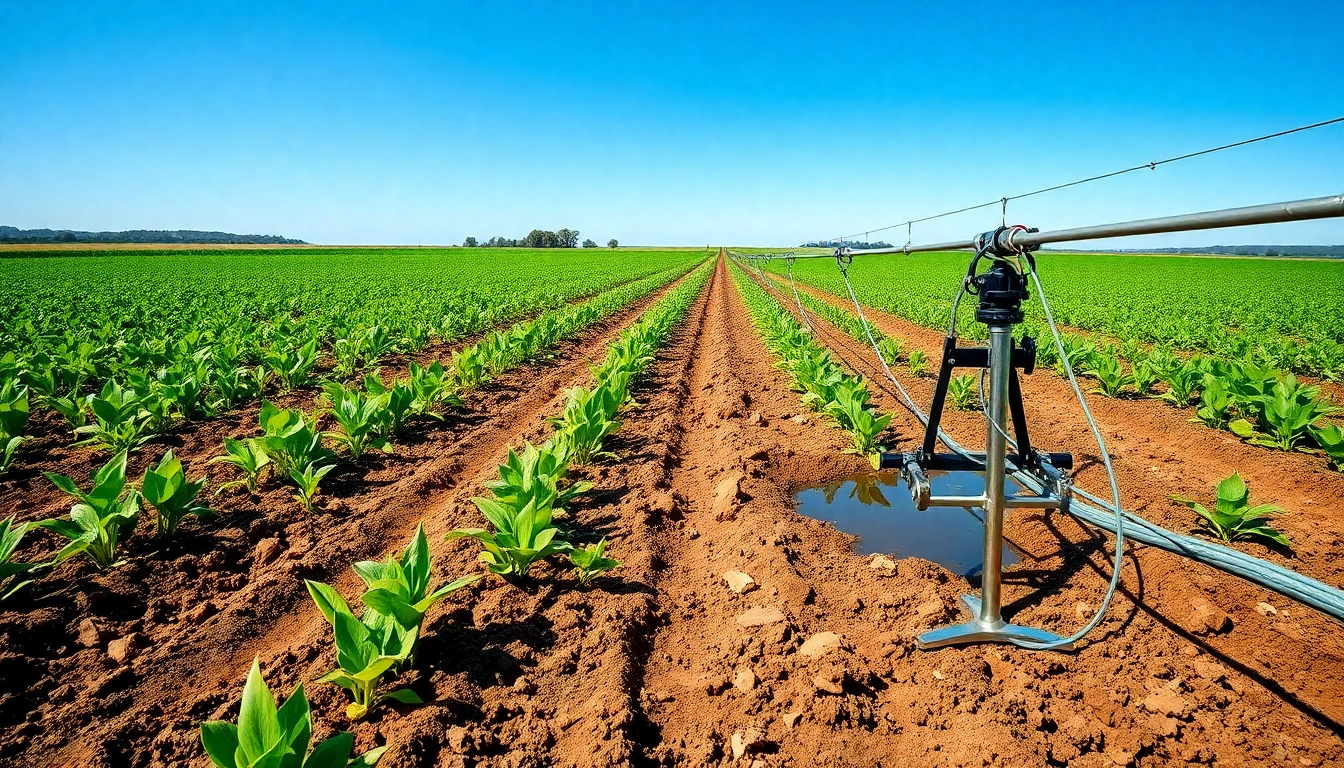
Understanding Land Irrigation Basics
What is Land Irrigation?
Land irrigation is a crucial agricultural practice that involves artificially supplying water to crops to enhance their growth and productivity. This practice originated thousands of years ago and remains essential in managing water resources effectively, particularly in arid and semi-arid regions. Through land irrigation, farmers can control soil moisture levels, ensuring crops receive the necessary hydration to thrive. The objective is to maximize crop yields while minimizing wastage of this vital resource.
Types of Land Irrigation Systems
Land irrigation encompasses various systems, each tailored to specific agricultural needs and environmental conditions. Below are some of the most prominent types:
- Surface Irrigation: This is the oldest and simplest form of irrigation. Water is supplied to the fields by flooding, furrows, or borders. It's effective for many crops, but performance can vary based on soil type and topography.
- Drip Irrigation: This highly efficient system directly delivers water to the plant roots through a network of tubing and emitters. It minimizes water loss due to evaporation and runoff and is ideal for row crops and horticulture.
- Sprinkler Irrigation: Mimicking rainfall, this method uses pumps to spray water over crops. It's versatile and can be adapted to varying landscapes; however, it may not be as efficient in windy conditions.
- Subsurface Irrigation: Water is delivered beneath the soil surface via buried pipes or tubes. This system reduces evaporation loss and prevents weed growth but requires more investment and maintenance.
Importance of Efficient Water Use
Efficient water use is vital not only for maximizing agricultural output but also for ensuring sustainability in farming practices. With increasing water scarcity globally, optimizing water resources is imperative. Efficient irrigation systems lead to:
- Reduced operational costs through lower water and energy consumption.
- Enhanced crop yields and quality due to precise water delivery.
- Minimized environmental impact by reducing runoff and conserving groundwater.
Choosing the Right Land Irrigation Techniques
Drip Irrigation vs. Traditional Methods
When selecting an irrigation technique, understanding the differences between drip irrigation and traditional methods is essential. While traditional methods may be less expensive to install initially, they can lead to greater water loss due to evaporation or runoff. Drip irrigation, though requiring a higher upfront investment, provides the following advantages:
- Water efficiency: Delivers water directly to the root zone, significantly reducing consumption.
- Fertilization ease: Allows for fertigation, integrating fertilizers into the irrigation system for optimal nutrient delivery.
- Weed control: Limits moisture on surface soil, reducing weed growth.
Assessing Soil Types for Effective Irrigation
The effectiveness of irrigation is highly dependent on the soil type. Soil texture, structure, and drainage capacity play crucial roles in determining how much and how often water should be applied. Clay soils retain water better but may become waterlogged, while sandy soils drain quickly but require more frequent irrigation. Farmers should perform soil tests to assess:
- Water retention capabilities
- Nutrient content
- pH levels
This information is vital for customizing irrigation schedules and methods to maximize resource use.
Climate Considerations in Irrigation Plans
Climate is another critical factor affecting irrigation strategies. Regional rainfall patterns, temperature fluctuations, and seasonal changes should inform irrigation practices. For instance, areas with long dry periods may require more robust irrigation planning to ensure crops are adequately hydrated throughout the growing season. Moreover, understanding microclimates within a farm can enable farmers to adjust their techniques for specific crop needs and environmental conditions.
Soil and Crop Management for Optimal Land Irrigation
Soil Testing and Fertility Management
Regular soil testing is essential for monitoring nutrient levels and pH balance, guiding fertilizer application practices. Soil fertility plays a central role in achieving optimal irrigation results. Strategies include:
- Utilizing organic matter and cover crops to enhance soil structure and nutrient profiles.
- Implementing crop rotation to improve soil health and reduce pests.
- Applying amendments based on soil test results to ensure balanced nutrition.
Effective soil management enhances water retention and absorption, thus improving irrigation efficiency.
Selecting Crops Based on Irrigation Needs
Crop selection is instrumental in achieving optimal irrigation outcomes. Every crop has its specific water requirements, which can significantly influence irrigation design and execution. Farmers should consider:
- Choosing drought-resistant varieties to conserve water.
- Aligning crop planting times with seasonal rainfall patterns.
- Determining crop compatibility with the chosen irrigation system, such as root depth and spread.
By selecting crops suited to their irrigation system, farmers can maximize yields and minimize resource loss.
Improving Drainage Systems for Better Irrigation
Poor drainage can lead to waterlogging, root diseases, and reduced yields. Improving drainage systems is foundational for effective irrigation. Techniques may include:
- Installing tile drainage to remove excess water from crops.
- Creating surface drains in high water areas to facilitate water movement.
- Adjusting soil profiles to improve natural drainage.
These strategies will enhance irrigation practices by maintaining sufficient soil moisture without saturation.
Innovations and Technologies in Land Irrigation
Smart Irrigation Technologies Explained
Smart irrigation technologies combine data analytics and automated systems to optimize water usage. Examples include:
- Weather-based controllers that adjust irrigation schedules based on local weather conditions.
- Soil moisture sensors that trigger irrigation only when soil moisture dips below a certain threshold.
- Remote monitoring tools that allow farmers to oversee irrigation systems from anywhere.
These technologies enable precise water management, leading to reduced consumption without compromising yield.
Integrating Sensors for Real-Time Monitoring
Integrating sensors into irrigation systems allows for real-time monitoring of soil moisture, water flow, and environmental conditions. This data-driven approach leads to:
- Proactive irrigation adjustments based on plant and soil needs.
- Identification of potential problems such as leaks or blockages.
- Enhanced decision-making based on precise data rather than estimations.
Farmers can significantly conserve water resources by knowing exactly when and how much to water.
Benefits of Automation in Irrigation Practices
Automation in irrigation can lead to numerous benefits, including:
- Labor savings due to reduced manual irrigation management.
- Consistency in water application, resulting in uniform crop growth.
- Reduced water waste through precise scheduling.
Investing in automated systems may present upfront costs but can lead to long-term savings and increased agricultural profitability.
Evaluating the Effectiveness of Land Irrigation
Key Performance Metrics for Irrigation Success
To evaluate irrigation effectiveness, farmers should consider key performance metrics, including:
- Water Use Efficiency (WUE), which assesses crops produced per unit of water used.
- Crop Yield per Irrigation Event, measuring output relative to the watering frequency.
- Soil Moisture Retention, indicating how well the soil maintains moisture after irrigation.
These metrics allow for ongoing assessments and adjustments, ensuring continuous improvement in irrigation practices.
Strategies for Monitoring Water Use Efficiency
Monitoring water use efficiency is vital to sustainable irrigation practices. Strategies can include:
- Tracking crop water use through established evapotranspiration rates.
- Utilizing tools that measure water applied versus the amount taken up by crops.
- Implementing periodic audits of irrigation systems to assess efficiency and identify leaks.
Through meticulous monitoring, farmers can optimize irrigation processes and ensure sustainable water use.
Case Studies of Successful Land Irrigation
Examining successful case studies can provide practical insights. For instance, farmers in arid regions have adopted drip irrigation, significantly boosting yields while reducing water use by up to 60%. Another example is the adoption of smart irrigation technologies by vineyards, leading to improved grape quality and reduced operational costs. These case studies exemplify the value of choosing appropriate irrigation methods tailored to specific conditions and requirements.
Frequently Asked Questions
What is the most efficient irrigation method?
Drip irrigation is often considered the most efficient method as it minimizes water loss and delivers water directly to the plant roots, reducing evaporation and runoff.
How often should I irrigate my crops?
Irrigation frequency depends on soil type, crop needs, and weather conditions. Conducting soil moisture tests can help determine when irrigation is necessary.
Can I use rainwater for irrigation?
Yes, using rainwater for irrigation is sustainable and can reduce water costs. Implementing rainwater harvesting systems helps collect and store this resource.
What factors influence irrigation effectiveness?
Key factors include soil type, climate, crop selection, irrigation method, and overall management practices. Proper assessment of these elements is crucial for success.
How do I maintain my irrigation system?
Regular maintenance includes checking for leaks, cleaning filters, seasonal inspections, and adjusting system components to ensure optimal performance and longevity.