

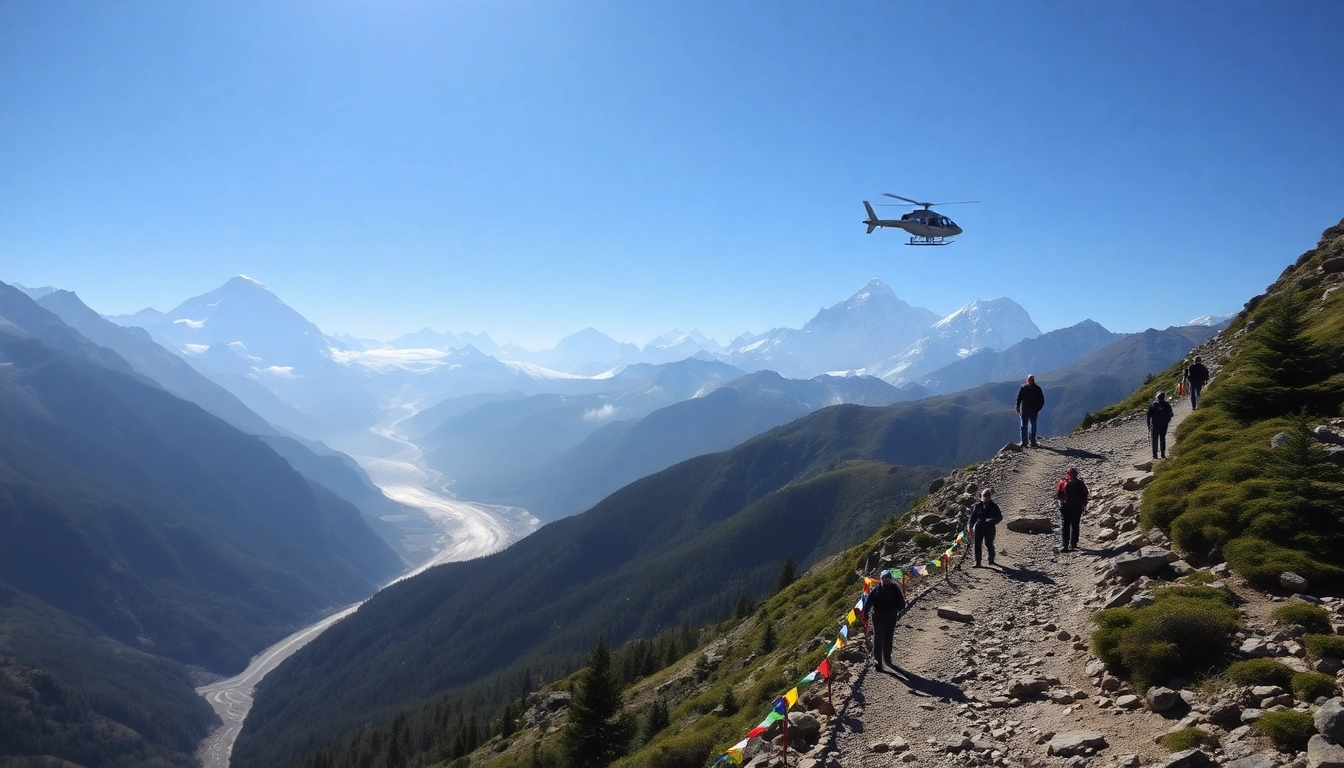
Overview of the Everest Base Camp Trek with Helicopter Return
The Everest Base Camp Trek with Helicopter Return offers adventurers an unforgettable experience blending the thrill of high-altitude trekking with the comfort of a helicopter ride back from the world’s most iconic mountain. This 12-day journey not only allows trekkers to set foot at the base of Mount Everest but also provides a swift and stunning aerial return, which is especially appealing for those with time constraints or those who prefer minimizing physical strain on the descent. As you navigate through the breathtaking landscapes, you will experience the rich cultural heritage of the Sherpa people, magnificent vistas of jagged peaks, and a sense of accomplishment that comes with reaching an elevation of 5,364 meters.
What to Expect on Your Trek
On this trek, participants can expect a mix of challenging ascents and rewarding views. Each day presents an opportunity to take in the beauty of the Everest region, with the trail winding through lush rhododendron forests, quaint Sherpa villages, and past serene monasteries. Acclimatization days are built into the itinerary, allowing trekkers to adapt to the rarefied air. The trek culminates in a sunrise hike to Kala Patthar, where breathtaking panoramic views of Everest and the surrounding peaks await.
Key Highlights of the Journey
- Acclimatization days in Namche Bazaar and Dingboche to prepare for higher altitudes.
- Visits to iconic sites like the Tengboche Monastery and the Hotel Everest View.
- A thrilling helicopter ride from Gorak Shep back to Lukla, providing stunning aerial views.
- Experiences of local culture through interactions with the Sherpa community.
Why Choose a Helicopter Return?
Choosing to return by helicopter significantly cuts down on the trek’s physical demands and time spent in the rugged terrain. The helicopter ride not only offers a unique perspective on the majestic Himalayas but also acts as a safety measure in the event of altitude-related health issues that can arise during the trek. This dual approach allows trekkers to relish the journey to Everest Base Camp while enjoying the convenience and comfort of a quick descent.
Itinerary Breakdown for 12 Days
Day-by-Day Schedule Overview
The itinerary for the Everest Base Camp Trek with Helicopter Return is strategically planned to ensure a balanced mix of trekking, acclimatization, and cultural exploration. Below is a breakdown of the activities scheduled for each day:
- Day 1: Arrival at Tribhuvan International Airport in Kathmandu and transfer to a hotel.
- Day 2: Fly to Lukla from Kathmandu or drive to Manthali (Ramechhap) and then trek to Phakding.
- Day 3: Trek to Namche Bazaar from Phakding.
- Day 4: Acclimatization Day at Namche; hike to Hotel Everest View and back.
- Day 5: Trek to Tengboche from Namche Bazaar.
- Day 6: Trek to Dingboche from Tengboche.
- Day 7: Acclimatization Day at Dingboche; hike to Nangkartsang Peak and back.
- Day 8: Trek to Lobuche from Dingboche.
- Day 9: Trek to Everest Base Camp and return to Gorak Shep.
- Day 10: Early morning hike to Kala Patthar; shared helicopter ride from Gorak Shep back to Lukla.
- Day 11: Flight back to Kathmandu or Manthali, with a same-day drive to Kathmandu.
- Day 12: Transfer to the International Airport for final departure.
Acclimatization and Health Considerations
Acclimatization is crucial in high-altitude trekking, where oxygen levels are significantly lower. This itinerary includes scheduled acclimatization days intentionally placed to allow trekkers to adjust to the altitude, reducing the risk of altitude sickness (AMS). During acclimatization, trekkers engage in shorter hikes that help the body adapt while enabling them to explore local sites and learn about Sherpa culture.
Essential Stops and Experiences Along the Route
Throughout the journey to Everest Base Camp, trekkers will encounter numerous landmarks and experiences that enhance the overall adventure. Notable stops include:
- Namche Bazaar: The bustling hub of the Khumbu region, offering shops, restaurants, and the Sherpa Cultural Museum.
- Tengboche Monastery: A significant spiritual site set against a stunning backdrop of peaks.
- Gorak Shep: The final settlement before Everest Base Camp, providing basic accommodations and services.
Preparation and Packing Essentials
What to Pack for Optimal Comfort
Successful trekking requires careful consideration of gear to ensure comfort and safety. Here’s a list of essentials that trekkers should include in their packing:
- Hiking boots (waterproof and sturdy with good ankle support).
- Layered clothing suitable for variable weather conditions.
- Warm sleeping bag rated for cold temperatures.
- First aid kit with altitude sickness medications.
- Reusable water container for hydration.
Gear and Equipment Recommendations
Essential trekking gear should include specific items for high-altitude conditions:
- Trekking Poles: Provides stability and reduces strain on joints.
- Sun Protection: Sunglasses with UV protection, sunscreen, and lip balm.
- Hydration System: Water purification tablets or filters, and a hydration pack or water bottles.
Physical Fitness Tips for Successful Trekking
Preparation for the trek should include a fitness regimen that enhances cardiovascular endurance and leg strength. Recommended activities include:
- Hiking on similar terrains with varying elevations.
- Strength training focus on legs and core.
- Cardio exercises like running, cycling, or swimming to improve overall fitness.
Costs and Inclusions of the Trek Package
Detailed Pricing Breakdown
The cost for the Everest Base Camp Trek with Helicopter Return typically starts at around $2,500 USD per person. This pricing may vary based on group size, seasonal demand, and included services. It is crucial to budget appropriately for this adventure.
What’s Included in Your Package
The comprehensive package for the trek generally includes:
- Accommodation in Kathmandu and during the trek.
- All meals (breakfast, lunch, and dinner) while trekking.
- A licensed English-speaking trekking guide and porters.
- Required permits for trekking in the Everest region.
- Helicopter flight from Gorak Shep to Lukla.
Additional Costs to Anticipate
While the package covers many essentials, trekkers should anticipate additional costs, including:
- Personal expenses such as snacks, drinks, and souvenirs.
- Tips for guides and porters.
- Insurance coverage, including medical evacuation.
- Extra costs for services such as hot showers or charging electronics.
FAQs about the Everest Base Camp Trek
Common Concerns and Misconceptions
Potential trekkers often have concerns about safety and the difficulty of the trek. It’s important to note that while the trek is physically demanding, proper training and acclimatization significantly enhance safety and enjoyment. Additionally, the helicopter return provides a safety net for those who may struggle on the descent.
Travel Tips and Recommendations for 2025
With conditions and requirements ever-changing, it’s advisable for trekkers to stay informed about travel regulations, including visa requirements and health advisories. It’s also beneficial to reserve spots early as spaces fill up quickly, especially during peak seasons.
Emergency Procedures and Safety Measures
During the trek, guides are trained in first aid and high-altitude safety. In the event of an emergency, immediate descent can be facilitated using the helicopter return option. Trekkers are encouraged to communicate any health concerns to their guides promptly.