

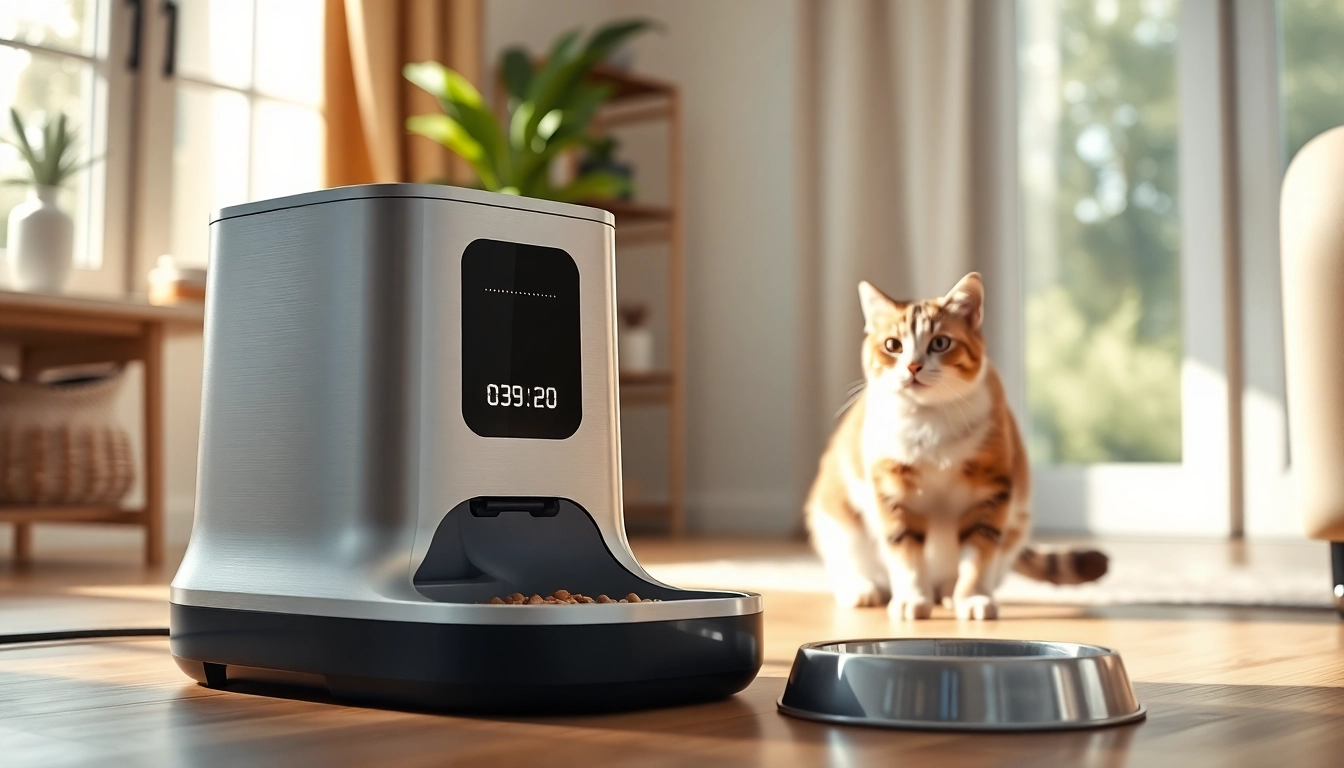
Understanding Automatic Cat Feeders
What is an Automatic Cat Feeder?
An automatic cat feeder is a device designed to dispense cat food automatically at designated times. These feeders are especially beneficial for busy pet owners who may not always be home to feed their furry friends on schedule. Automatic cat feeders can help regulate portion sizes and feeding times, ensuring that your cat receives the appropriate amount of food without overeating or missing meals. Many modern models come equipped with advanced features like programmable timers, voice recording capabilities, and even smartphone connectivity, allowing pet owners to manage their cats’ feeding times remotely.
Benefits of Using Automatic Cat Feeders
The benefits of employing an automatic cat feeder extend beyond mere convenience. Here are several key advantages:
- Consistent Feeding Schedule: Regular feeding times can help improve your cat’s digestion and overall health, mirroring their natural feeding behavior.
- Control Portions: Automatic feeders can help prevent overeating, an issue that leads to obesity and other health problems.
- Convenience: Ideal for busy lifestyles or for pet owners who travel, these feeders allow for meal dispensing without human intervention.
- Reduced Stress: Cats benefit from routine, and not having to worry about when they will eat can reduce anxiety, leading to more settled pets.
- Tracking Food Intake: Certain models allow you to monitor and log your cat’s food consumption, which can be beneficial for dietary management.
Different Types of Automatic Cat Feeders
Automatic cat feeders come in various types, each catering to specific needs and preferences:
- Gravity Feeders: These feeders utilize gravity to dispense food as your cat eats. They typically don’t require electricity, but portion control may be less accurate.
- Digital Feeders: Digital or programmable feeders allow you to set precise meal times and portion sizes. They often feature LCD screens for easy configuration.
- WiFi-Enabled Feeders: These advanced feeders can be controlled via smartphone apps, allowing pet owners to schedule meals or check on their pets remotely.
- Wet Food Feeders: Some models are specifically designed for wet cat food, and include an insulated area to keep the food fresh and cool.
- Microchip Feeders: Designed for multiple cats, these feeders only open for cats registered on the feeding device, preventing food theft among pets.
Key Features to Look for in an Automatic Cat Feeder
Meal Scheduling Options
One of the primary features of an automatic cat feeder is its meal scheduling capability. Different feeders can offer varying levels of functionality, so consider the following:
- Multiple Meal Settings: Look for feeders that allow programming of multiple meals per day, giving you flexibility in managing your cat’s diet.
- Customizable Timers: Some feeders enable you to set precise times for meals, catering to your pet’s natural preferences and your schedule.
- Analog vs. Digital Timing: Digital feeders provide more precise programming than their analog counterparts, which may use dials for settings.
Portion Control Features
Ensuring your cat receives the correct portion size is crucial. Features to consider include:
- Adjustable Portion Sizes: Select feeders that allow adjustments in the amount of food dispensed at each meal, allowing for personalized feeding.
- Measure with Accuracy: Verify that the feeder you choose can measure food accurately, especially if your cat needs to follow specific dietary prescriptions.
- Capacity: Consider the feeder’s food capacity which can affect the frequency of refills necessary.
Ease of Cleaning and Maintenance
Feeding devices should be easy to clean and maintain to ensure the health of your pet. Key features to focus on include:
- Dishwasher Safe Components: Select feeders with parts that are dishwasher safe to simplify the cleaning process.
- Material Quality: Choose feeders made from non-toxic, durable materials that don’t accumulate odors or stains.
- Easy Assembly: Look for feeders that can be easily disassembled and reassembled for cleaning without complicated mechanisms.
Popular Brands of Automatic Cat Feeders
Brand Comparison: Features and Prices
When considering an automatic cat feeder, several brands stand out in terms of product offerings, features, and pricing:
| Brand | Key Features | Price Range |
|---|---|---|
| Petlibro | Programmable timers, multiple meal slots | $50 – $100 |
| SureFeed | Microchip activated, easy to clean | $75 – $150 |
| PETKIT | AI camera integration, portion control | $75 – $200 |
| Whisker | Smart technology, interactive features | $150 – $300 |
Best-Selling Models
Some best-selling models that have received rave reviews from customers include:
- Petlibro Automatic Pet Feeder: Praised for its reliability and user-friendly interface, suitable for all cat sizes.
- SureFeed Microchip Pet Feeder: Known for its effectiveness in preventing food theft in multi-cat households.
- PETKIT Smart Feeder: Features an integrated AI camera that allows owners to monitor feeding from afar.
- Whisker Feeder-Robot: Combines smart technology for feeding management with a sleek design.
Customer Reviews and Feedback
Feedback from users indicates a variety of experiences and insights that can be helpful when selecting an automatic cat feeder. Here are common pros and cons highlighted:
- Pros: Most users appreciate the convenience, ease of use, and the ability to program feeds according to their cats’ needs.
- Cons: Some feeders have issues with consistent food dispensing or connectivity problems with smart features.
Setting Up and Using Your Automatic Cat Feeder
Initial Setup and Configuration
Setting up your automatic cat feeder is typically straightforward, but each model may vary slightly:
- Read the manual provided with your feeder to understand the specific setup process.
- Choose an appropriate location away from excessive moisture or heat to ensure the feeder remains functional.
- Fill the food bowl with dry food, ensuring it’s compatible with the feeder.
- Set the desired meal times and portion sizes using the controls provided.
- Test the feeder to ensure it dispenses food at the programmed times.
Feeding Schedules and Adjustments
Once your feeder is configured, it’s essential to monitor its performance and make adjustments as needed:
- Observe your cat’s eating habits. If they seem to finish their food too quickly, consider adjusting portion sizes.
- Utilize the programmable timer to adjust meal frequencies, especially if you notice changes in your cat’s appetite or energy levels.
- Regularly check and replenish the food supply to prevent empty bowls and ensure your cat is fed as scheduled.
Troubleshooting Common Issues
Automatic feeders can sometimes encounter problems. Here are common issues and their solutions:
- Feeder not dispensing food: Check for blockages in the dispensing mechanism and ensure the feeder is powered appropriately (battery/plug).
- Food clumping or jamming: Use dry food that is appropriate for the feeder size and avoid moist foods unless specified.
- Timer issues: Ensure batteries are charged and settings are correctly programmed as per the instruction guide.
Comparing Automatic Cat Feeders with Traditional Feeding Methods
Pros and Cons of Automatic Feeders
While automatic cat feeders provide many benefits, they also come with challenges. Here’s a balanced view:
- Pros:
- Convenience for busy schedules.
- Improved diet management and control over feeding portions.
- Reduces the need for frequent human intervention.
- Cons:
- Some cats may not adapt to automatic feeders.
- Malfunctions can lead to missed meals.
- Generally more expensive than traditional feeding methods.
When to Choose an Automatic Cat Feeder
Choosing an automatic feeder is most beneficial in the following circumstances:
- If you work long hours or travel frequently.
- If your cat has specific dietary needs that require precise portion control.
- If you have multiple pets and want to prevent food theft among them.
- If you aim to establish a consistent feeding schedule for your cat.
Expert Vet Recommendations on Feeding
Veterinary experts have differing opinions on the use of automatic feeders. Some key recommendations include:
- Always consult with a veterinarian regarding dietary needs specific to your cat’s health.
- Use feeders with reliable portion control to prevent obesity.
- Consider the personality of your cat, as some may prefer human interaction during feeding times.
